Thursday, 16 October 2008

The Most Important Nine Word Sentence in Advertising

Your site advertising is a wonder to behold, and you're attracting plenty of traffic. Strangely, though, you don't seem to be getting any more conversions than you did before your campaign. What's the problem? Sad to say, your problems could be deeper than marketing. Keep reading for some tips on where to look.

As the commercial sector expands, the competition also increases. With globalization taking on humongous proportions, it would be safe to say that no manufacturer today enjoys a monopoly. This competition has given rise to the concept of marketing and advertising.

Marketing is a crucial aspect of the sales figures of almost any commercial activity. How the product is presented to the prospect is considered as important as the product itself. But what most advertising businesses seem to overlook is the most important nine word sentence in advertising. In the words of Rosser Reeves, "A gifted product is mightier than a gifted pen."

The star of the advertisement is the product, not the ad itself.

The central idea behind this nine word sentence is reinstating the importance of the product, which is the ultimate weapon in winning over your client. Rosser Reeves was most remembered for his annoying Anacin advertisement, which was so excruciating for the viewer that the headache medicine's name was embedded in his/her mind. In fact the sales of Anacin tripled after this advertisement went on the air.

Rather than focus on the quality of the advertising, Reeves believed that the product should be the star of the advertisement. Instead of focusing on creating a beautiful and fancy advertisement, the focus should the on imprinting the product's name in the prospect's mind.

Finding the USP of the product and propagating it is the name of the game

It is the unique selling proposition (USP) of the product that should be elaborated in the advertisement, so that it is imprinted in the viewer's mind. Reeves adopted the use of slogans to ensure that prospects remembered the product along with its USP. The Dettol antiseptic company launched a soap which was propagated as an antiseptic soap. While it is known that all soaps are antiseptic in nature, Dettol managed to create a niche for itself by advertising its USP as being an antiseptic soap. So creating a unique selling proposition for the product and imprinting it in the prospect's mind is the trick to effective advertising.


Good advertisements must generate sales in order to be effective

The ultimate idea behind any business-related activity is to make profits. Absolutely no energy should be wasted in undertaking any activity that fails to deliver in support of this ultimate goal of profit making. Profits are made when products are sold. Advertising is a marketing strategy that helps draw the attention of possible buyers towards the product. However, if the advertisement is unable to add to the sales and therefore the consequent profits of a venture, then regardless of the quality of the advertisement, it fails in its aim.

There are several noted ads that are remembered and honored for their great creativity; however, sadly, in many ads, the product seems to be forgotten completely. So while the ads were lovely, they were at the same time useless. Unless the advertisement can compel your prospects to remember the product and maybe even buy it, it is a bad advertisement, no matter how creative the concept behind it may be.

Repeat sales make the real profits

Marketing is a combination of four Ps, namely "product," "price," "placement" and "promotion." Most advertisers seem to forget this combination and interpret the meaning of marketing as only "promotion" of the product. It is imperative to understand the logic of business if one is to develop a coherent advertising strategy. Profits are made when clients return for the product repeatedly. If a soap manufacturer manages to sell one bar of soap to everyone in the vicinity, the business will start a downward trend as soon as the last customer has been attended to. It is only when users of a product buy it once, use it, are satisfied with it and come back repeatedly to purchase it, that a company can grow indefinitely.

Even in the virtual world, advertising strategies are developed in order to not only lure the prospect once, but have browsers return to the site often. eBay has earned a reputation for itself which makes shoppers return to the site for various products. Similarly, there are holiday package-providing sites like makemytrip.com that have plenty of clients returning to look for affordable and interesting holiday packages on the site. The success of these sites lies in clients returning to use their services over and over and over again.


The product itself and not the advertising is what creates repeated sales
No matter how efficient the product advertisement is, it can only raise the prospect's interest in the product and do absolutely no more. A good ad that places the product in the right light and focuses on its USP will only manage to make the prospect pay attention to the product. An interested prospect may buy the product once.

But from that point on, it is the quality of the product, its value for money and other such intrinsic attributes, that will come into play. The "repeat sales" wealth-creating formula can only be executed and implemented by the product. The copywriter can in no way help in adopting or executing this plan. So unless the product is satisfying the customer's needs, the buyer will not return to purchase it again, regardless of how good the advertising strategy of the product is. The best of advertisements cannot make a customer buy a product repeatedly unless the client has been satisfied by the product.

Continuing with the Anacin example, the advertisement made people remember the annoying jingle and therefore by default remember the name of the medicine. But it was when they tried the headache pill that users realized how effective it was. This made them return to the product repeatedly. So what the Anacin advertisement did was embed the name of the product in the prospect's mind -- and that's it. The repeated sales were only created by the pill itself.

The product quality should not take a back seat to the advertising strategy

When pumping large amounts of money into your advertising strategy, never ignore or compromise on the quality of the product. It is the product that will help you cash in on the major profits that can be generated by repeat sales.

Ignoring product performance at the cost of advertising strategy is sure to spell doom for the venture. Since it has been proved that it is the product and not the advertising that causes repeat sales, it is of course crucial that the product be given its due attention.


Repeat sale statistics are like life saving drugs
Successful business ventures give due attention to maintaining regular and correct "repeat sales statistics" because these send out several signals that are crucial for the business. Repeat sales statistics warn the manufacturer early that the product is not faring well against the competition. Armed with this knowledge, corrective measures may be taken in time to pull the product up to mark once more.

For this reason, it is highly advisable that these statistics be maintained month after month and year after year. While almost all commercial ventures understand the importance of advertising, many of them fail to recognize the life-saving effects of "repeat sale statistics."

It is an obvious conclusion now that, while advertising is essential in today's day and age of communication and exposure, it should not take away the focus from the product itself. Simply hiring a creative copywriter is not the solution to good and effective advertising. A good copywriter is not one who creates original ads, but one who is able to bring out the USP of the product. It is the USP of the product that will help create a niche for it.

Advertising agencies that can use the USP of the product in a magnetic manner to bring the prospect to the point of making the first purchase shall be considered effective. From then on it is the product that will perform.

At no given time should the quality of the advertisement awe the viewer to the extent that he or she ignores (or forgets) the product been advertised. So while the temptation to out-perform the product is usually difficult to fight off for a copywriter, a good copywriter must at all times keep the product as the prime and only star of the show.

The M&M slogan "melts in your mouth, not your hands" is a classic example of how the product USP was portrayed in such a way as to keep the product itself as the highlight of the advertisement. Prospects remembered the product and their curiosity was also heightened enough to want to try it out. M&M still rules the market today, and the slogan has lasted for decades now. It was the advertisement created by Reeves that got the prospect's attention, but it was the quality of the product that retained this interest over the years.

Making Your Blog Pay

Making Your Blog Pay
If you write, you can make money online – or so you’ve probably heard. Unfortunately, it’s not as easy as it looks; you may make money, but getting rich, or even a living wage, is a little trickier. This article collects some ideas for your consideration.

First, you’ll want to make sure that your own writing is up to snuff. Sure, you can name any number of places online with deficient writing, and so can I for that matter. But bad spelling and grammar gets in the way of your message, and web users with short attention spans will not want to cut through the chaos. This should be basic, but some of the sites I visited while researching this article reminded me that it isn’t.

Beyond the actual writing, there are certain matters of formatting you might want to consider. Jennifer Osborne, writing for Search Engine People, completed a very good article called “10 Golden Rules of Blogging.” Much of it involves keeping in mind the special points that make writing for the web different from any other kind of writing. For example, there are things you can do to encourage more people to read what you’ve written, such as including buttons for submitting the article to social networking sites. And remember that short attention span I mentioned? You’ll want to cater to it with:

  • Killer headlines every time that grab the reader.
  • Blog entries that are short and succinct, perhaps 400-700 words long, and mostly substance.
  • Posts that are easy to scan, with bulleted lists, bold text, and enough white space to allow the content to “breathe.”
  • Pictures and images that help convey your point. Clip art does not look professional for a business blog, but an on-topic image, regardless of the topic, is not hard to find.

Osborne lists a number of important rules, and I recommend you follow the link. But even she admits, “They’re just table stakes to make it even possible to sell.” I’ll come back to that point later in this article. In the next section I’ll discuss a couple of firms that actually pay bloggers to write.


Pity the Starving Writers

One of the best-known ways to make money from your blog, if you’re specifically producing content and not trying to use it to sell anything, is AdSense. This Google program lets web sites earn revenue by allowing the search engine to place relevant text ads on their pages. Your content must be acceptable; Google provides a long list of rules which a web site must follow to be approved for AdSense. You’ll still have to promote your site on your own to get enough views and click-throughs on AdSense ads for this to make money for you.

There are also affiliate programs. Practically everybody knows about Amazon.com’s program; it was launched back in 1996, making it perhaps the oldest such program on the web. Three of our sister sites regularly run items with affiliate links to Amazon. If you’re an avid reviewer, this might be a way for you to make a little income on the side. Once again, though, you’ll have to promote your own web site.

If you’re not averse to promoting advertisers within your blog, you might want to look at Pay Per Post. The Pay Per Post business model matches advertisers with bloggers, letting advertisers sponsor specific blog entries if the entry’s content meets with their approval. The blogger then gets paid.

It’s a little more complicated than that; every Pay Per Post blogger is expected to follow a code of ethics under which they are required, among other things, to reveal when their post has been sponsored by an advertiser. The amount of money a “Postie” makes varies depending on the opportunities they choose to accept, whether their posts are accepted, and many other factors. Top posties can make $2,000 or more in a month, but the average seems to be closer to $200 or less for casual bloggers.

Associated Content offers an interesting business model. It encourages bloggers to write on any topic and submit the post to its “yield management system.” It then pays the writer an up-front fee that usually runs between $4.00 and $20.00. Contributors get another $1.50 for every thousand page views their post receives. AC puts the post on its own web site, and also distributes it directly to specific web sites in its network. AC will also put out “calls for content;” a recent check of the site revealed 83 of them for subjects ranging from celebrity gossip to health issues (such as appropriate exercises for multiple sclerosis).

There is some controversy surrounding Pay Per Post and Associated Content. Some complain that these kinds of companies reduce the quality of content online. Others say that paying bloggers for content, especially the way Pay Per Post does, may cause them to be dishonest in the opinions they express, thus causing problems with the online signal-to-noise ratio. At least one blogger has accused Associated Content of unethical business practices.

Be that as it may, a number of professionals have observed that a good writer can make more money writing their own blog for their own purposes than they can if they write for Pay Per Post or Associated Content. In the next section, I’ll talk about some of the things to keep in mind if you’re using your blog to sell.


The Blog as Sales Tool

Let us assume that, rather than getting paid for your content or advertising around your content, you’re selling a product or service. Your blog then becomes a sales tool. Blogs can be great for building traffic; people are always searching for information on the Internet. If you provide them with the information they’re looking for, they’ll not only stop by and read it; they’ll subscribe to your blog and tell their friends about it. That doesn’t automatically mean they’ll purchase from you, however.

You need to change readers and browsers into customers. How do you accomplish this? Osborne recently wrote about five steps a blogger can take, after mastering the ten golden rules of blogging, to get readers to convert. Some of these also make sense if you’re focused on content and your goal is to boost traffic.

For example, the first step is to build your authority. Are you an expert? Make sure that your readers know it – not from you saying so, but from your sharing your knowledge. Is there one aspect of your field that you know better than anyone else? Write about it. Read about it, too, and link to other blogs in your industry that contain information useful to your readers.

Speaking of links, you can use them proactively to get your readers to convert. Osborne calls this following the “loop strategy” in your posts. Link your reader to the logical “next step.” If you’ve shown them interesting content, link to the next thing they’re likely to find of interest.


Serve Your Reader’s Interest

Here’s something you might not expect: one of the things your reader might find of interest is who YOU are. That’s why your third step is to make sure you have an “About Us” page in your blog. I’ve written about the “About Us” page before, so I’m not going to rehash all my arguments here. I’ll agree, however, with the one Osborne makes.

To put it simply, if I read a blog on a topic that interests me, and I’ve never heard of the writer, I’ll want to know something about them. If you don’t have an “About Us” page, you will leave me wondering – and you’ll pass up an opportunity to build my trust in you. People don’t buy from those they don’t trust; they can’t trust you if they don’t know who you are; and, while there are lots of ways they can find out who you are, isn’t it easiest for you to just tell them?

Now, earlier I said that it’s a good idea to have a “loop strategy” that takes your reader to the next page in which they’re likely to be interested. That could very well be a landing page for your product or service. There’s nothing wrong with linking to a product if it’s related to your blog entry or article and you’ve given the reader useful, related content. For example, who writes articles about the weight loss benefits of green tea? Those who want to sell you green tea, that’s who. “Does that bother me? Not if the article was useful,” Osborne notes. (And if you're really observant, you'll notice I used the loop strategy myself in the first paragraph of this section).

Here’s another good reason to link your blog entry to a landing page: it means that you can have your “call to action” for the purchase somewhere other than in your blog post. A blog, ideally, lets you provide information; it’s not a direct salesman. Leave that to your landing page. There are a number of ways you can ask for the close on that page; I’ve written about landing pages as well. But your blog is not a landing page.

Your blog can bring you money in a variety of ways. I’ve listed only a few here, and given you some tips for using it in conjunction with selling a product or service. I hope I’ve given you enough ideas to work with. Good luck!

Qassia: Intelligent Link Building?

Everyone talks about building links in the SEO Chat forums, so when I saw someone asking about Qassia and its link building potential, I knew I had to take a look. The self-described intelligence engine is in closed beta at the time of writing, but invitations seem easy to obtain. What is Qassia all about? And is it worth your while? In this first part of a two-part article, we'll explore these and other questions.

Qassia describes itself as “a credit-driven intelligence engine coupled to a cascading tag-based directory.” You sign up with Qassia and add knowledge, what the site refers to as “intel.” Kimsolutions, the SEO Chat user who first brought Qassia to my attention, explained that the intel can be your own or something you are legally distributing. I want to emphasize the word “legally,” by the way; the company is pretty strict in their terms of service about that.

They're also very strict in their ToS about each user having only one account, ever, in their lifetime. If you ever make more than one account you will be barred from their site. And if you don't understand their terms of service, they tell you not to use Qassia. I can understand the strictness; this is intellectual property we're dealing with after all.

Anyway, for every piece of intel you add to Qassia, you get a link back to your site. These are dofollow links, not nofollow links – so you can see how this might help you in the link juice department. Every time you create an intel, read and rate an intel, and/or invite a new user you gain Qassia dollars. This is “funny money” that can't be turned into any other currency – but “The more Qassia dollars you have, the better your websites will rank,” according to Qassia's FAQ. You never have to spend real money to use Qassia; the company plans to keep that totally free, and make its money from advertising (Google ads pop up in lots of places throughout the site, and of course next to many pieces of intel).

“Eventually we will introduce auctions for front-page advertising, site-wide links, and other novel ways for you to burn through your hard-earned Qassia dollars,” the company notes. And there are ways to earn real dollars with Qassia, but I'm getting ahead of myself. Let's see what it takes to set up an account, and what it's like to use Qassia.

This part was very easy. All I had to do was click through the link left by Kimsolutions in the SEO Chat forum, which took me to Kim's profile page on Qassia. At the upper left was a big button that said “Sign up today!” I clicked that and came to a standard-looking sign-up page:


What got cut off in this screen shot were the three items that I was required to check: that I was over 16, that I have never had any other Qassia accounts, and that I had carefully read and understood their Terms of Service. I'm quite certain that the rule about no multiple accounts, ever, is intended as a spam control mechanism, and it probably isn't the only spam control feature the site has in place. I don’t know how they police that, however.

After I registered, Qassia served up a dashboard. I'm almost hesitant to do a screen shot, because it's so full of information that a single image won't do it justice. It's clear that Qassia intended the dashboard to be your starting point and a place for you to get many of your questions answered. It's laid out in the familiar three-column format, with the center column being the largest.

Down the left side were several boxes that seemed especially of interest to newcomers. The first one told me that I was eligible for a bonus – that for the next 12 hours, if I got someone to sign up for Qassia, I'd get $500 Qassia dollars instead of the usual $100. The second box led to a link that explained how to earn Qassia dollars. The third box explained a special promotion. The fourth box contained a list of intel for screening, and the final box gave links to the latest updates (the most recently approved intel, from the looks of it).


Now that I've described the left side, I don't feel guilty about cropping it out in the following screen shots of the dashboard:

As you can see from this top part of the dashboard, Qassia subscribes to the sensible idea of giving a user several ways to do things. I can add intel from either the center column of my dashboard or that box on the upper right. There's also a user's manual right at the top, which I'll probably be discussing later. Oh, and as you can see, they're making money – or trying to – from Google ads. Here's the bottom half of the dashboard, sans ads:

Okay, right away we see at least one similarity to a social networking site: you get a user profile. You don't have to put anything in your profile at all. If you do choose to edit it, you can tell it to display a number of things:

  • A particular name. Your user name will be displayed here if you don't pick one.
  • An image, such as your photo, which will be resized to 500 x 500 pixels.
  • An introduction, into which you can embed links. Double check your formatting; when I tried to embed a link, I got an error that said “Thou shalt close thine [url] embedded link [/url] formatting” with the second bracketed item in red. Okay, so they have a sense of humor – and I need to be more on the ball for tagged formatting! At least I didn't have to re-enter the whole page, just fix the problem.
  • Your location; it's an open text box, so you can enter a city or country (or possibly even an imaginary location, though I didn't go that far).
  • Your email address; this is controlled by a radio button that lets you choose whether or not to publish it in your profile. By default, your email address is NOT published, so kudos to Qassia for having a clue about privacy.
  • Your contact information through various messaging services, including Skype, Yahoo, MSN, ICQ, and AIM.


After signing up and looking at a few things, I found myself wondering who is behind Qassia. Unfortunately, I was in for a little frustration. Under Qassia's FAQ, all it says is this: “We are an international web development outfit you've probably never heard of. Chances are, though, that you've come across our sites while browsing the net, because we've been putting out good, useful and sometimes crazy sites since 1996. Qassia is, needless to say, our far most ambitious project yet.”

Okay, this is going to drive me crazy not knowing who they are! And the only press release on the site itself, at this time of writing, is one announcing that Acreon, Inc., has taken a five percent stake in the company. There is no mention of how much that comes to in money, since Qassia is still privately owned.

So what other information can we glean from the site itself? Qassia was launched in January of this year. At the time of writing, it has accumulated more than 19,000 members, who are trying to promote a like number of sites. Users have submitted nearly 30,000 items of intel, with nearly 11,000 of these items being “original” (I couldn't immediately find any explanation of the difference between plain intel and original intel). They have banned 97 users, which is not a bad record. It will be interesting to see if they will scale well once they come out of private beta.

That's all I have time and room for now. In the second part of this article, I plan to explain how to find intel, submit and screen intel, and cover other interesting topics about Qassia. I might even have some useful quotes about the site. See you then!

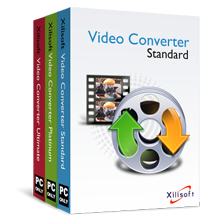
Xilisoft Video Converter


Xilisoft Video Converter is powerful, versatile video conversion software which converts between all popular video formats such as convert AVI to MPEG, WMV to AVI, WMV to MPEG or H.264/AVC video, convert AVI files to iPod formats, etc.

No other programs like Xilisoft Video Converter supports so comprehensive with video formats including AVI, MPEG, WMV, DivX, MP4, H.264/MPEG-4 AVC, RM, MOV, XviD, 3GP, FLV, VOB (the video format used in DVD), DAT (the video format used in VCD, SVCD), etc. In addition, the video converter provides an easy way to convert video file to popular audio file, like MP2, MP3, WMA, WAV, RA, M4A, AAC, AC3, OGG, etc. The video converter also supports APE, CUE decoding and audio CD ripping(CDRipper,DVD Ripper).

Xilisoft Video Converter supports popular multimedia devices such as PSP, iPod, iPhone, Archos, mobile phone, Zune, etc. All conversions, such as AVI to MPEG, WMV to MPEG, WMV to AVI, MKV to AVI, MKV to MPEG, are very easy and fast with the best quality. Free download Xilisoft Video Converter to have a wonderful experience right now!

you can download : http://www.xilisoft.com/downloads/x-video-converter-standard.exe

What's new in latest version:

How to upgrade?
  • The newly added support for multi-core CPU makes the video conversion much quicker;
  • Now you can add and adjust subtitle files (ASS, SSA or SRT format) to get video files with adjusted subtitle;
  • Directshow decoding gets supported in the new version;
  • Better conversion video and audio quality is offered now;
  • Clip segments from video and audio, and output them respectively or merge them into one;
  • Video editing functions added: crop video size, add watermark, and adjust effects;
  • Preview clipped segment and fixed video, and even preview source video and fixed video for comparison;
  • Multiple profiles can be set for one original to convert, and more optimized profiles are offered for PSP and other digital devices;
  • Capture picture from video and create video from pictures;
  • A Bitrate Calculator is available for you to customize the output file size exactly.

Main Functions:

  • Act as 3GP Video Converter, iPod Video Converter, PSP Video Converter, Zune Video Converter, AVI MPEG Converter, MP4 Video Converter, MOV Converter, MKV to MPEG converter, etc.;
  • Convert between all popular video formats including AVI, MPEG, WMV, DivX, MP4, H.264/MPEG-4 AVC, RM, MOV, XviD, 3GP, FLV, help you on how to convert AVI to MPEG, convert MKV to AVI, convert MKV to MPEG;
  • Convert videos to popular audio files, including MP2, MP3, WMA, WAV, RA, M4A, AAC, AC3, and OGG, and convert between these audio formats;
  • Extract pictures from video and output them as JPG, PNG, GIF, BMP, SWF;
  • Convert pictures to video formats like AVI, FLV, SWF, MOV, 3GP, WMV, etc.

Key Features:

  • Powerful video effect editing functions to customize your video: crop video size, edit video effects, and add video watermark; (Ultimate only)
  • Support the decoding and encoding of lossless audio; (Ultimate only)
  • Preview and compare the source video and fixed video; (Ultimate only)
  • Merge several files or clipped segments to one for conversion; (Ultimate and Platinum only)
  • Clip segments from video and audio, and output them respectively or merge them into one for output; (Ultimate and Platinum only)
  • Preview clipped video segment; (Ultimate and Platinum only)
  • More optimized and classified profiles are supported now, and any profile can be customized to create your own one with your favorite settings;
  • Customize the output file size and auto-calculate corresponding video bit rate;
  • Multiple output formats can be set for one original to facilitate your conversion;
  • Convert videos to compatible formats to work on PSP, PS3, iPod, iPhone, Apple TV, Zune, Archos, blackberry, iRiver PMP, Creative Zen, etc.;
  • It supports H.264/AVC video format, PSP H.264/MPEG-4 AVC encoding/decoding, PSP H.264/AVC Video (480x272) (*.mp4);
  • It provides batch conversion and multithreading, thus you can select multiple files at one time to have them convert one by one automatically;
  • You can convert any clip or segment of the video at will by setting the start point and duration, and split one source file to several by duration or file size;
  • video codec and audio codec can be modified: alternatively select video codec such as MPEG4, DVvideo, Mjpeg, etc. for AVI, H263, and MPEG4 for 3GP, as well as audio codec like PCM, MP2, MP3, MPEGAAC, AC3, etc.
  • When converting files, you can pause, stop and continue at any moment;
  • You can keep the default settings or set parameters of the video and audio by yourself to get particular effects for output file.
you can download : http://www.xilisoft.com/downloads/x-video-converter-standard.exe

Xilisoft Video Converter

An excellent universal video converter which can convert video files between almost all popular video and audio formats.

Xilisoft Video Converter is a powerful, universal AVI MPEG video converter which can convert video file between all popular video formats such as converting WMV to AVI, WMV to MPEG, AVI to 3GP, converting H.264/AVC video. It supports convert video files between AVI, MPEG, WMV, MOV, RM, 3GP, H.264/AVC, MP4, ASF, VOB (the video format used in DVD), DAT (the video format used in VCD, SVCD), etc. In addition, Video Converter provides a powerful way to convert video files to popular audio files, including MP2, MP3, AC3, RA, M4A, OGG, AAC, etc. It supports APE, CUE decoding and audio CD ripping. All conversion processes are very easy and fast with excellent quality.

you can download : http://www.xilisoft.com/downloads/x-video-converter-standard.exe

Thank you for visiting my Blog !